
Rubber waterstops are critical components in construction projects, designed to prevent water leakage in concrete joints and structures. Ensuring their quality is essential for long-term durability and safety. This article explores the key methods and standards for testing rubber waterstop quality, providing insights into industry practices and technical requirements.
Visual and Dimensional Inspection
The first step in quality testing involves a thorough visual and dimensional inspection. Rubber waterstops must be free from defects such as cracks, bubbles, uneven surfaces, or contamination. According to industry guidelines, surface imperfections deeper than 2mm or larger than 10mm² within a 1-meter sample are unacceptable. Dimensional accuracy—including width, thickness, and length—is measured using precision tools. For instance, thickness should be checked at multiple points to ensure consistency, with deviations not exceeding design specifications.
Additionally, alignment checks are crucial. Misaligned waterstops or improper installation can compromise waterproofing performance. Inspectors verify that the product’s central holes (if present) are uniformly positioned and that edges are straight and smooth.
Hardness and Flexibility Tests
Hardness testing evaluates the material’s resistance to indentation, which correlates with its ability to withstand pressure and deformation. A durometer is used to measure Shore hardness, with results typically falling between 60 and 70 Shore A for standard rubber waterstops. Flexibility is assessed through bending tests, where the material is clamped and subjected to controlled force to simulate real-world stresses. A high-quality waterstop should bend without cracking or permanent deformation.
These tests ensure the product can adapt to concrete movement caused by thermal expansion or structural settling. For example, rubber with low hardness might deform excessively under load, while overly rigid materials could crack under stress.
Tensile Strength and Elongation Capacity
Tensile strength determines how much force the waterstop can endure before breaking. Samples are stretched in a testing machine at a controlled speed (e.g., 50–500 mm/min), and the maximum load is recorded. High-performance rubber waterstops often exhibit tensile strengths above 12 MPa, with elongation rates exceeding 300%. These metrics indicate resilience against structural shifts and hydrostatic pressure.
Elongation capacity is equally important. During testing, the material’s ability to stretch without tearing is measured. This property ensures the waterstop remains intact even when joints widen due to seismic activity or settling.
Aging and Environmental Resistance
Rubber waterstops are exposed to harsh conditions, including UV radiation, temperature extremes, and chemical exposure. Accelerated aging tests simulate these environments. For example, samples are placed in ovens at elevated temperatures (e.g., 70°C) for 168 hours to assess thermal degradation. Post-test evaluations check for changes in hardness, tensile strength, and surface integrity.
Chemical resistance is tested by immersing samples in acids, alkalis, or saline solutions. A quality waterstop should retain at least 80% of its original mechanical properties after exposure. These tests are vital for applications in coastal areas or wastewater treatment plants, where corrosion risks are high.
Adhesion and Compatibility Checks
Rubber waterstops often include metal components (e.g., steel edges) or require bonding to concrete. Adhesion tests measure the strength of these interfaces. For steel-reinforced waterstops, samples are clamped in a tensile machine, and force is applied until separation occurs. Acceptable results show cohesive failure within the rubber rather than at the bond line.
Compatibility with concrete is evaluated by embedding the waterstop in a test mold and observing how well it integrates during curing. Poor adhesion can lead to voids or weak zones, increasing leakage risks.
Compression and Recovery Performance
Compression tests assess the waterstop’s ability to seal gaps under pressure. A sample is compressed to 25–50% of its original thickness and held for 24 hours. After release, its recovery is measured; high-quality rubber should regain at least 90% of its initial shape. This property is critical for maintaining a watertight seal in dynamic joints.
Compliance with Industry Standards
Quality testing must align with recognized standards. For example, tensile tests follow protocols like ASTM D412. while hardness measurements comply with ASTM D2240. Certifications from third-party agencies ensure transparency and reliability. Manufacturers should provide test reports covering physical properties, chemical resistance, and dimensional accuracy.
Conclusion
Testing rubber waterstop quality requires a multi-faceted approach, combining visual inspections, mechanical evaluations, and environmental simulations. By adhering to standardized methods and rigorous criteria, engineers and contractors can ensure these components perform reliably in demanding applications. Regular quality audits and compliance checks further mitigate risks, safeguarding the longevity of infrastructure projects.
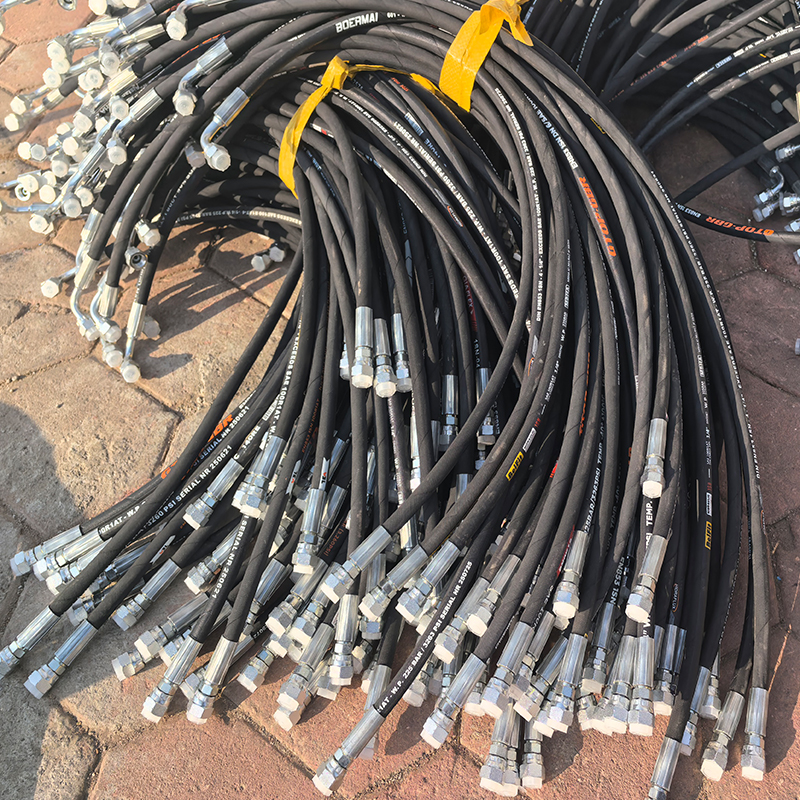 How to Create a Proactive Spiral Hydraulic Hose Replacement Plan That Prevents Downtime?
 Is Your Hydraulic System Overstressing? 5 Diagnostic Signs You Need to Upgrade to Spiral Hose
 Is Your Hydraulic System Pushing Limits? When to Specify Spiral Hose vs. Braided?
 Is Your Machinery Demanding More? Why Upgrade to a Spiral Hydraulic Hose?